Showing posts with label travel. Show all posts

Wednesday, May 30, 2012

The Big Party

First course

perch fillets

Veal with cranberries

The party lasted ten hours. Without proper nourishment, nobody could last through swimming in the lake, dancing, drinking, sitting, talking and drinking some more.

Road signs


Every bush hides an automatic radar machine. The speed limit changes constantly. If you pass a white rectangular sign with a red border indicating the name of a village, no matter how tiny, the speed limit drops to 50 km/h. You are supposed to know this. There wont’ be a speed limit sign - just a radar machine or a cop. If you’re on the open road, without a barrier in the middle, the speed limit will be 90 km/h. Unless it’s not. It could be 70. Narrow streets in tiny villages allow snails to pass, with speed limited to 30 km/h. If the road is divided, the speed limit is supposed to be 110 km/h, but it seems that they can issue more tickets by making it 90 km/h. Never assume anything. The autroute, a much more expensive option than the routes nationaux or departementales, allows a maximum speed of 130 km/h, unless it’s raining. Then it’s 110 km/h. 

Here, the rignt of way really is a right of way. Unless otherwise indicated, anyone coming from the right has the right of way, and you have to let them go. Unless you have a yellow diamond sign, or a sign with an upright arrow crossed by a tiny black line. Then you’re free to roll through the intersection, with only a twinge of fear that the other car will scream out in front of you.

Along with all this are small signs. They’re not into billboards, thankfully. The signs are small, indicating local hotels, restaurants and camping areas. It seems that each village of any size at all has its own tourist office.

Driving on small roads through the countryside is like connecting dots. The nearest big cities are indicated by arrow-shaped signs at intersections. Smaller hamlets have their own signs, relative to their proximity. So if you’re going far - say from Nemours to Anneccy, you need to know the names of the larger towns along the route. You can also use a compass, since the road network is like a series of triangles between villages. If you’re wrong about the relative direction of an indicated town, you might end up going the wrong way. If you ignore the increasingly strident voice of your passenger trying to point out this fact, things can get a bit tense. 

We pass a large sign inviting us to visit the Arcy Caves, indicated as something not to miss in Bourgogne. Unless you’re claustrophobic. We continue. 

Yes, we’ve returned to Bourgogne, this time under a blue sky. We’re even moving in the right direction.

In the middle of nowhere, two signs for restaurant-inns compete for our attention. Rivals, apparently. Voutenay sur Cure seems too small to have two inns, yet there they are. 

For now, we ignore the signs - lunchtime is still an hour away. 


The landscape flashes by in a blur, people towing camping trailers in the right lane, the most impatient in the left, and everyone else jockeying for their place in between. Two white lines between cars indicate the proper following distance. There are never two lines between our car and the one we’re following. This is not a place for daydreaming; someone may approach from behind instantly, or someone heading on vacation in a loaded camper might be crawling along on the left - all this with other cars zipping from one lane to another, each trying to beat the others in the race toward the South.

While we race rally-like, the radio plays. Music alternates with interviews. This being France, the interviews are about… cuisine. So, imagine someone trying to note a recipe, flying across the blacktop at 80 miles per hour, weaving to maintain the most advantageous position. Cuisine and high speed, a dangerous combination, yet we saw no carnage.


Luckily, it’s not my turn to drive.

A man with an accent we can’t identify gives an interview for his recipe for cod in bacon. A piece of cabaillaud (cod) or colin. Some chopped garlic, some white wine, some bacon or better yet, a sheet of smoked pork belly, salt, pepper and chopped onion. Season the fish, wrap it in the bacon. Fry the onions, add the fish, turning to brown it a bit, add the garlic, sauté a bit more, add the white wine and pop the whole thing in an oven to finish. Serve with rice. 

And old song by Jean-Jacques Goldman plays.

They talk about French cuisine in the Middle Ages, how so many ingredients that now form what we call classic French cooking did not exist, because nobody had been to the Americas to bring them back. No tomatoes, no potatoes, no peppers…

An updated version of “La Javanaise”, by Serge Gainsbourg streams from the speakers, followed by some news items: “A boulangerie was held up at gunpoint. Apparently, no bread was stolen”. French humor.

A quick tidbit about discusses oysters in gelée. Annette seems impressed, until I mention that it’s really quite simple to make, if you have good oysters and a clear seafood stock.

A song from “Starmania” plays. Strange. They’re not exactly into recent music on this station. These are good songs, but they’re at least ten years old. Maybe gourmets and aficionados of fine French cuisine don’t listen to rap…

Simplicity | 24 May


groceries


charcoal sack

local breads


Good ingredients, simply prepared. Sometimes it’s what you really want, not an elaborate plate that required days of work by a kitchen team. 

We’re back in the Gatinais, a land of plains dotted with small hills topped with tiny villages. Our village is so tiny it’s not even listed on most maps, nor do signs from the adjacent town point out its direction. Tourists don’t come here. It’s agricultural. No fancy cathedrals, no museums, no big department stores filled with expensive fashions. This is a place of fields, ancient stone churches, swallows that swirl and dive over the landscape and sky.

Luckily, there is a good butcher and a wine cheese and produce market in Puiseaux, about ten minutes away by car by tiny roads crossing wheat and sugar beet fields. 

The boulanger sold us a sesame bread and a type of baguette with a fancy name. Perhaps because of the weather, none of these had a terrific crispy crust normally associated with bread in France. We’d already noticed this from other bakers. A pretty big disappointment when you fly 6,000 miles and end up with the same quality of bread you’d get in your local supermarket in Sacramento!

We bought lamb chops from the butcher, along with some ham and a saucission. From the other store, we bought a large red coeur de bœuf tomato, tangerines, carrots, garlic, a lemon and a beet. We moved to the cheese section to buy cantal, a tomme de chevre, a muenster au cumin and a saint nectaire. We thew in a bottle of Mas de Mare l’Original 2010, a hearty red wine from the Pays d’Oc recommended by the owner.

We tasted most of the cheeses before we bought them. Perhaps because of my accent, we were repeatedly warned that some of them were very strong. This was especially true for the very mature tomme de chevre, something that was a bit runny, covered in a thick moldy crust with a flavor that hit like an enraged goat and stuck to your tongue with a vengeance. I could imagine someone, shocked by the strength of the cheese, scraping his tongue with anything available to free himself of the taste.

The supermarket furnished us with a label rouge chicken, fed only on grains and much tastier than the generic fowl adjacent to it. We added some yogurt and our shopping was complete.

Lunch was simple: a table in the garden, surrounded by passing bumblebees. We started with a salad of grated carrots with a bit of lemon, salt, pepper and chopped parsley, followed by ham, a bit of cheese and a tangerine for dessert. 

Dinner was only a bit more elaborate than lunch. We started with the salami. The lamb chops got seasoned with salt and pepper, oiled, and thrown on the grill. They were sprinkled with fresh chopped rosemary toward the end of cooking, then taken off to rest. The tomato was transformed into thick slices, seasoned and grilled while the meat rested. Afterward, the cheese, all washed down with the Mas de Mare. 

We sat and watched the swallows circle overhead, serenaded by a merle who sat on the adjacent roof, some tourterelles and a pigeon ramier or two, while the flavor of the tomme de chevre slowly faded in our mouths.

____

It's now the beginning of August, 2012. I wrote this over two months ago, and nobody ever read it. Not one person. Bad title, or is simplicity just not worth reading about in our over-complicated lives? I don't know - nobody comments on a post they never read.

Repas simple | 23 May


With all this driving around, it’s good to have a safety meal ready to go, so you can eat something good with virtually no preparation at all. 

A salami, a can of friture de canard or rillettes, a bottle of wine, some bread and cheese combine to create a meal that’s a perfect antidote to  post-route fatigue.

Chez Camille, Arnay-le-Duc | 23 May


“Let’s go there - they have a menu du terroir!” Annette said as we walked up the street in Arnay-le-Duc. 

I’d been tempted by another, smaller restaurant, but when we peeked in the lights were off and the place looked deserted. So, Chez Camille it was. The menu looked decent, and better yet, they had a pastry chef in addition to the chef and sous-chef (pastry chefs are quite rare in restaurants back home, at least restaurants that I can afford).

After asking for a table for two, we were ushered into a small, dimly lit lobby crammed with furniture. We sidled between pieces of furniture, wondering if someone found too good a bargain to pass up, brought the furniture to the inn and crammed it into the lobby.

The chef, a tall somewhat gaunt man, greeted us as he moved to another room, where he was having his lunch. The kitchen would survive without him.

We were given menus. A small plate of amuse-gueles arrived. Charcuterie in aspic, more charcuterie en croûte. 

We ordered two prix fixe lunches -  “Menu du Terroir”   -  featuring an appetizer, main plate and dessert (or cheese).  Other people with reservations were ushered quickly into the dining area, no lounging required.

We remained in the lobby. 

“Um, this ever happen to you before, being stuck in a lobby?” I whispered. 
“Non, jamais,” my wife replied.
“So presumably we won’t be eating in lounge chairs with bent knees off a too-small table?”.
“No. I think not.”

Happily she was correct. The lounge interlude was just a pause before entering. The dining area lay under a twisted ficus benjamina, pruned artistically to crawl along the underside of the skylights. The kitchen, with large windows open to the action, nestled against the far wall. An ancient stone stairway led underground to the wine cellar, leaving the waitress about two centimeters of clearance between her head and the keystone. 

The tables featured white tablecloths with large decorative plates bearing an illustration of the restaurant. As soon as we were seated, the fancy plates disappeared. It’s normal to have expensive display plates, but usually guests get to enjoy the artwork prior to the plates going back to their niche. 
Another waiter arrived with a basket of rolls: bacon, normal and grain. Bacon in bread always strikes me as a bit American, a gimmick to spend less time developing the bread’s flavor by adding a bit of smokiness and fat that wouldn’t otherwise be there. The plain roll was competent, if not exquisite.
Our entrées were a lapin en gelée and a bouchée à la reine. The first was bits of cured rabbit put into a mold and covered with aspic and chilled. The bouchée is a columnar puff pastry filled with bits of meat and vegetables, typically in a béchamel sauce - although I think they might have used velouté here for lightness. Both were competent, with the edge going to the rabbit.

Our main course sautéed Charolais beef with scalloped potatoes and a somewhat sour version of Bordelaise sauce. We couldn’t drive by all those fields of grass-eating cows without dining on one. 
Dessert was a good Mousse au chocolate and a type of fruit mousse thing whose name I forgot.
The chicken will be for tomorrow. Placed on a bed of garlic, carrots and shallots and roasted, a sage-based sauce whipped up from the jus to drizzle over the meat. It won’t need anything more, since these chickens are bred and raised for flavor.

Bernard Loiseau (no, I didn’t eat there)


Somehow, instead of heading north towards Montbard, we turned south, toward Saulieu. I really don’t know why - I wanted to visit nearby Epoisses, site of a very famous - and very fragrant - cheese.

We drifted among verdant rolling hills, passed through woods, small villages and wheat fields. There was no way to know what direction we were going; the sky was a uniform gray with no indication of the sun’s position. 

We arrived in Saulieu, more a small town than a tiny village. We’d heard that one of France’s most prestigious restaurants, Bernard Loiseau, was here. We wondered how to find it, until we realized that it was just a bit farther down the street from where we parked. I’d imagined something more intimate... Instead, it was an imposing two story structure painted a warm pastel color, with its name writ large. To the left of the restaurant’s entrance, a boutique invited people to visit with windows displaying their goods for sale. 

We entered the boutique. There was a display of All-Clad cookware from the USA, with some pieces different than those typically sold in the United States. A pot with tapered (not rounded) sides, for example. A round table displayed cookbooks and biographies of Mr. Loiseau himself and of course the illustrious restaurant. To their credit, there weren’t any T-shirts, although they did offer towels like those in the hotel. 

We didn’t eat there. For one thing, it was only 10:30 in the morning. For the other, the place was intimidating, like it dared us to pass within, if we were worthy. 

Menus placed in stanchions outside featured a colorful dish of frog leg “drumsticks” placed radially around a plate, sitting in a bright green sauce or Charolais beef cooked with a clay crust. There were some elaborate foie gras preparations. I forgot the rest, but I ‘m sure it’s all online. 

The menu we looked at was somewhere around 195 euros per person. I don’t know if that included wine. So, about the same price as The French Laundry back home. 
___

The next day, I turned on the TV to see if the weather would improve or if we were doomed to gray skies. Good news, the gray skies will disappear and the sun will return. 

After the weather forecast, the regular programming started. This being France, there was a program featuring culinary arts students on a field trip. Apparently they have a better budget than we, since they went on a week (or weeks) long discovery of food producers. 

They showed a cave where they make Cantal cheese, large wheels stacked on wooden planks, row upon row disappearing into the misty depths of the caves. Everything isn’t so rustic, though: robots flip the wheels at regular intervals. Expert cheese makers tap the wheels with mallets to determine its condition, kind of like a human sonagram. After years of tapping wheels of cheese, it is possible to discern its exact state of ripeness just by tapping and listening. 

The students visited a charcutier, who works in a large conical wooden smokehouse packed with hanging sausages, slabs of bacon and dry-cured hams. The air inside was only slightly smoky, fed by a small stream of smoke issuing from a pit in the floor. 

Despite all the raw-appearing meat, there were no flies. He mentioned that flies don’t like properly cured meats; they only attack rotting things, meaning that if there are flies something went quite wrong. 
At the end of the field trip, the students did a two day stage at Bernard Loiseau in the front of the house (see, this section does belong here with the restaurant). They learned how to properly iron and place the round, white tablecloths. No wrinkles on the edges. Then they placed the plates, making sure the “BL” was correctly oriented. The spoons, one finger’s width, rounded side up, to the right of the plate. Every piece placed with mechanical precision. Perfection, perfection! They were understandably nervous, but it apparently all worked out. 

The restaurant does not serve meals; they serve dreams. They explained that, just like The French Laundry, some people save up for years just for the experience of dining there. The experience, the memory, is the thing here. I suppose that the food needs to be interesting, too - but presentation and ambience reign.

Strangely, the boutique could have been used to better effect. If the restaurant was a fantasy, the boutique was a down to earth means of moving merchandise. Nobody greeted people as they arrived nor thanked them when they left, unlike a chef’s boutique we visited in California. There was no sense of welcome whatsoever. If there was a wonderful, expensive cookbook showing the restaurant’s creations (à la French Laundry Cookbook), I didn’t see it. 

What if we’d be greeted and welcomed in the boutique? Would be now be $500 poorer, but graced with wondrous memories of a fantastic meal?

Semur en Auxois


The landscape flows past. Green grass decorated with pale, almost white cows amid yellow buttercups. Hedgerows separate the fields, creating a tapestry of greens draped across rolling hills.

Semur en Auxois is a medieval city built atop a ridge next to a river. It has ramparts, towers, ancient stone walls, narrow streets guarded by gates (at least in the old part of town). 

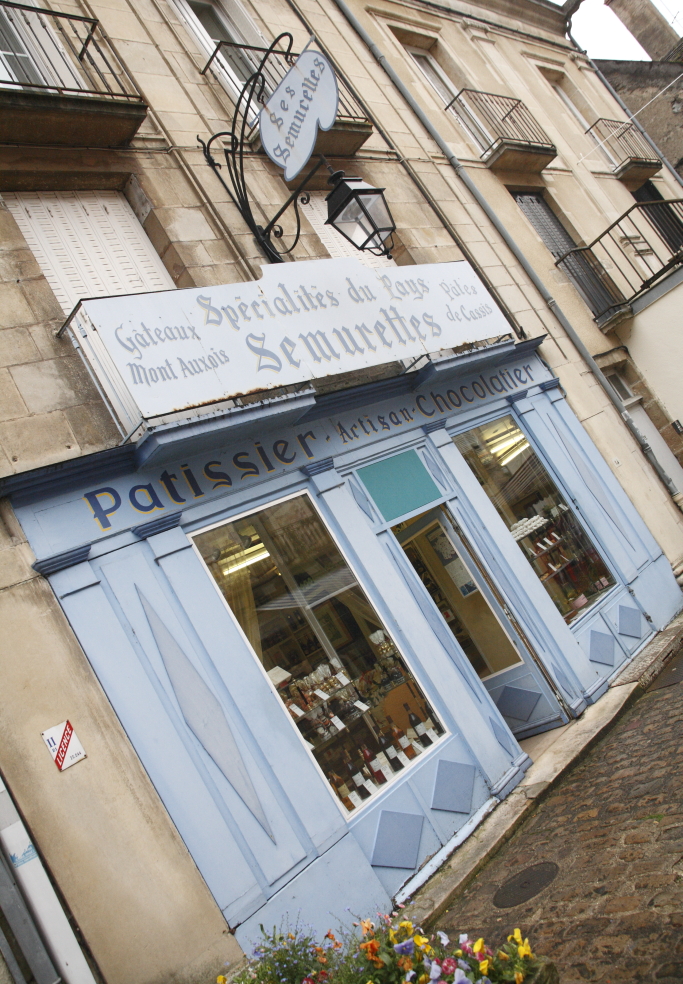
We asked around for the local culinary specialty, thinking it would be something relative to all those cows, cheese, or perhaps wheat. Nope. It’s semurettes,  small dark chocolate truffles shaped like rugby balls (or American-style footballs).  They directed us to a blue shop in the heart of the ancient town, presided over by Mr. Coeur, master chocolatier. Semurettes aren’t something you eat in quantity. They’re rich, dark chocolate ganache coated with cocoa powder, more rich than sweet.

Strangely enough, Mr. Coeur leaves for California in a couple of weeks, to follow the famous Highway 1 between San Francisco and Los Angeles.   

Monday, May 21, 2012

Foie Gras, a tale of two cultures


"How can the government tell you what you can and cannot eat?" people say, with an astonished look. I explain the typical arguments about force feeding (gavage), and how people in the California government use them to justify legislating an entire business out of existence, at the same time telling restaurants they can't serve the stuff, and intruding in everyone's choice of diet.

The anti-foie gras arguments typically revolve around the alleged cruelty of the force-feeding process, mixed with general animal rights issues.

People here in France then wonder about other food-related legalities that they consider questionable. Doesn't California allow chickens to be raised where they never see the sun or breathe fresh air? They wonder how large industries can serve genetically modified food, something they feel lacks sufficient information on its long term effects on human health. They hear in the press that medicinal antibiotics can be given to beef, allegedly creating dangerously resistant bacteria - yet this practice is apparently legal.

So far, some common questions repeat. One is concerned with lawmakers wasting time on what they consider a relatively minor issue; another is about legislating away personal freedom. Then there are the inevitable questions about the faction that so adamantly opposes the sale of this product.

Where is the government that is supposed to protect us from what many feel are unsafe and unhealthy industrial practices? Instead, they're busy legislating foie gras out of existence? Why?

Why did people in the government decide to stick their legal fingers into everyone's dinner, arbitrarily snatching an ingredient off everyone's plate while leaving other arguably more questionable foods untouched? Is America a free country or not? What will they outlaw next, and with what justification?

Some hear that people selling foie gras in California allegedly receive death threats against themselves and their families. They ask how can someone who would kill another person over their diet claim moral superiority, something I certainly can't answer.

Talking with people involved with selling and producing foie gras is interesting. The industry has quality standards and regulations. As long as people make sure the certification is valid these standards will have been followed. The birds - ducks or geese - are fed a grain only diet and live outside. For most of their lives, they're not force fed. They walk, quack (or honk) and eat. After a certain age, they're force fed - not as nasty as foie gras opponents claim, since birds can supposedly breathe with a feeding tube in their throats. Likewise, the process is supposedly not painful when done correctly - although I suppose you would have to ask a duck or goose to get the final answer. They don't seem to run away after they've been through the gavage thing, so presumably they either have short memories or it's not as bad as it looks. Producers say that torturing the birds leads to inferior product, and that they want happy, fat animals to get a top quality rating.

So far, I've only talked to one purveyor here in Paris. It was a long talk, however. Along with the questions, there was a bit of attitude concerning our respective styles of government. He felt that the French government would never interfere in people's choice of diet without a very good reason (prohibiting eating endangered species, for example). Domestic ducks and geese certainly don't fall into this category.

The French know where their foe gras comes from, what the birds are fed and how they're raised, or at least can easily find answers to these questions. Can we say the same about our chicken, pork or beef?

Baguettes


The flour for this bread was milled in La Ferte Alais, not too far from Paris. It said this on the bag. It added that the bread was made in the bakery. Not frozen and shipped there to get stuck in an oven and sold.

The funny thing is that other baguettes at the same bakery were not so specific, and could have been less soigné. It's not always clear exactly which breads are artisanal and which are just placed next to artisanal but in fact are anything but.

Strangely enough, even in Paris it's not always that simple to find an excellent baguette, slowly fermented from selected wheat, nursed from flour, water, salt and yeast (or starter) all the way to a cracklingly crunchy baguette with a wonderful sponge and a succession of flavors that form and reform as you chew.

Some neighborhoods have a number of award-winning boulangers - unfortunately they're all far from here, too long a metro ride just to pop in and fetch something to go with our Camembert au lait cru.

Friday, May 18, 2012

Croissants in Paris


There are two kinds of croissants at the boulanger down the street in Paris. Ignore the thing on the extreme left - it's a chocolate croissant, made with margarine. The middle croissant sells for about € 0.95, because it's a "croissant ordinaire". Paler, whiter, less glossy, with the ends turned 90°. On the right, a croissant pur beurre, golden, glossy, about € 1.10, with straight ends. It's more expensive because it's made with real butter.

Considering how croissants are made - by layering yeasted dough with fat (butter or margarine) - they can't be fat-free. So it comes down to butter vs. margarine. I guess "margarine" does not sell as well as "natural".

Maybe I'm strange, but it seems to be that butter - churned cream - is more "natural" than margarine - treated vegetable oils, process unknown.

Sunday, May 15, 2011

Which Port in a Storm?


Since we had to write a paper for a class, and I needed an excuse to organize and type my notes from a recent trip to Porto, Portugal, this was a great way to kill two birds with one stone. I have no idea how well (or poorly) my papers have been received in this class, since I never got one back graded, marked up or commented on. Nor did I get confirmation via e-mail that they were even received. Ever. Talk about instructor apathy! So my other motive is insurance: it will be difficult to say I didn't finish on time if the paper is sitting right here on this server two full days before it's due.

This version was edited slightly because I can't post something without rewriting it at least a couple more times to correct, clarify and hopefully improve the text.


Port now comes in Pink. It’s new, it’s colorful and you can even make cocktails with it. Pink probably won't dethrone our favorite Ruby and Tawny Ports here in the United States, but it's probably more accessible for younger drinkers. White Port is also starting to make an appearance, and should do well here since it's lighter than the reds and is served chilled - a better option for summer.

All varieties start as wine, made from grapes grown on schist soils around the Douro Valley. Red grape varieties include Touriga Nacional, Touriga Francesa, Tinta Barroca, Tinta Roriz (Tempranillo) and Tinto Cão. Many of these are the same varietals as used to make Douro wines. There are also white varietals but they don’t seem to be considered important enough to list by the producers. Presumably they use the same varietals as for white Douro wine: Codega, Rabigato, Donzelinho, Viosinho, Cercial...

Fermentation is stopped after about two days by adding 77% alcohol spirits that kill the yeast and preserve the sugar in the beverage. The final result is Port, with an alcohol content of 20%.

Crushing, fermentation and blending with spirits takes place outside of Gaia, with much of it done in Regua about an hour’s train ride up the Douro from the coast. Most Port is blended, aged and bottled in Vila Nova de Gaia, after being trucked there from Regua or elsewhere up the Douro Valley. Those interesting boats loaded with barrels floating on the Douro are just for show; they can no longer compete with trucks for efficiency.

Port prices run the gamut from around $10-$15 for whites and rubies, $15-$40 for tawnies, $50 and up for Vintage. Select vintage Ports can run over $400 and even $500 on auction at Christie’s. The saying in Porto is “the older the better” and the price reflects this.

Sorting the types of Port can be a bit confusing, since prices do overlap and non-vintage (NV) tawnies can be priced by age, creating an overlap with true vintage and LBV Ports. Whites, Rubies and Tawnies can also be reserve selections.

White Port
As its name suggests, this is an amber colored liquid. It’s still somewhat sweet and at 20% alcohol it’s best as an apertif. Unlike red Port, it’s served chilled at 8°-10° C (46°-50° F). It can be extra-dry or extra sweet, and some wineries, such as Ramos Pinto, make a variety of styles. Many spend some time on oak.

Pink Port
The new kid on the block, Pink Port seems to be quite the rage among producers. At Croft, it never sees wood at any point in its production, being made exclusively in stainless steel. It’s served chilled like white port and is marketed as a component in cocktails like The Runaway or the Sunset. Croft suggests drizzling it over fruit sorbet with a mint garnish, mixing it with jasmine tea, or using it to make Sangria.

Ruby Port
Typically, ruby Ports are not barrel aged, since the goal is to keep a bright ruby color. They stay in a cask for three to five years, and are blended across years. These wines are less complex than Tawnies, with more fruit and less woodsy tones, placing them between whites and Tawnies. This wine will keep for weeks or months once opened.

Tawny Port
This wine gets some barrel time. Most are non-vintage and blended across years. Tawnies are also sold by age, although since they’re a blend this is somewhat subjective. These Ports develop woody, caramel, honey notes and nice complexity that (hopefully) justify their higher price. These should be served lightly chilled at 16° C (60° F). Once open, the wine will keep for weeks or even months. Colheita Tawnies get six years in barrels.

Late Bottle Vintage (LBV)
Ruby Port from some years is judged of better quality than average by a single producer and is given the LBV designation, with all wine from a single year. It’s typically aged six years at Croft, four at Sandeman - so apparently there’s no hard and fast rule on aging time. Some, such as Quinta de Ventozelo, are unfiltered and should be decanted before drinking. These wines may mature somewhat in bottles.

Vintage
This is the high end stuff, with vintage years officially declared by the Port Wine Institute. These exceptional years happen on average but a couple of times per decade.
Many are foot crushed, apparently to smash out as much tannin from the skins as possible from the outset of the crushing process. Since this happens in a shallow area, there is probably also a lot of aeration going on to help the yeast.

These wines are typically unfiltered and need careful decanting prior to drinking. These wines mature in bottles, and like LBV, should be stored on their sides so that the cork remains wet. These wines are still good after 100 years, and 15 years aging is considered a minimum, with Sandeman’s tour guide saying that 25-30 years’ aging is preferred.

These wines have a ruby color during their first five years in the bottle, aging gradually to a more amber color.

Once you decide to open a vintage Port, you have two days to drink it before it degrades. Invite friends, since at 20% alcohol you’ll be doing your liver a favor by not drinking it all yourself.

Explorations
Nobody can visit the Porto region without stopping off for some tasting. Considering the number of producers offering their wares, we decided to limit our exploration to two wineries.


Sandeman
The Sandeman Don looms over the city of Porto. He’s everywhere, more ubiquitous than Mickey Mouse at Disneyland. He’s the mysterious figure dressed like the tour guide, holding a glass of Port that seems to float magically over his shoulder.

Like most ports, the Don is really English. Sandeman, Croft and many others are owned by British companies and have been since the 18th century.

You wander idly about the museum, gazing at the history of Port in general and Sandeman in particular. The dim lighting and rough wood finishes give the impression of being inside a cask,  or perhaps an ancient sailing ship transporting Port wine to England.

The tour will begin in twelve minutes, by consensus in English. You grasp your € 4.00 entry ticket, waiting for a short woman dressed in  black to lead you forward. Everything seems calculated to burn the house’s logo, the Don, into your brain: he’s plastered on all major axes of circulation, printed on your ticket, explained in the house museum. The guide, a very serious young woman, bears his costume, a wide-brimmed black hat and black cape that absorb the little light present in the cellar so that she almost disappears when she turns her back to the audience.

She beckons, and the group advances, speaking French, English and German in hushed tones as they walk across the wood pavers that line the floor. The pavers are for humidity control and to allow the barrels to be easily moved, the guide explains.

We move down a long corridor lined on both sides with barrels. Vertical cages packed with bottles rise behind the barrels on the right, marked with hanging signs indicating the year they were bottled. These are o meior, vintage Ports. A sign indicates 1957, and I wonder what manner of elixir their contents have become after sitting so long in this dark cave.

The corridor terminates in an array of towering casks, each holding over 20,000 liters of Port.
A wood cutout of the Don reminds everyone where they are, in case the memory dimmed during the three minute walk from the entrance.

The tour proceeds past a small, azulejo-lined pond complete with goldfish (why not cave fish, I wonder). The pond is functional, to maintain humidity.

Flexible pipes crawl across the ground, used to move the Port from the casks to wherever they see fit. In the distance, workers move about, but it’s not clear what they’re doing in this place where the chief asset to quality seems to be time. Time to age the Port, allow it to become imbued with the essences of wood and grape, to mature into something wonderful.

Eventually we pass out of the cellar into a small viewing room, where after a series of slides urging us to drink responsibly, we learn about the regions where the wine is grown, fermented and held prior to arriving in Gaia for aging.

After the presentation, we taste. Today we have a white port and a ruby.  The glasses, already filled and counted, await us at rustic wood benches next to a store where we can purchase Port, T-shirts and all kinds of swag imprinted with the image of the Don.

The white port was a medium amber color and had a sweet note, followed by fresh-sawn oak. Maybe a bit of raisin for fruit. On the tongue, a bit of acidity to balance the sugar, and a caramel finish. A much lighter, perhaps more approachable drink than a red Port, probably with enough sweetness to appeal to younger drinkers. White Port is served chilled, so probably a better choice in summer, too.

The ruby had a better showing of fruit; cherry, maybe blackcurrant, some vanilla, and a bit of caramel. A sip confirmed this impression. This was a much more complicated wine, yet finished cleanly with lingering caramel.


Croft
After Sandeman, we decided to head well upslope from the Douro to Croft. They produce the same three kinds of Port as Sandeman, plus one other. They make the traditional wood-aged Tawny, the fruitier and less-aged Ruby, White and only recently, Pink. Think fortified White Zin or rose and you’ll get the picture. Something pretty, easy to drink and new.

Croft tour guides dress more like flight attendants crossed with matadors. Tours are in English only. It doesn’t matter if everyone on the tour is French. They’ll adapt. They’d better, since closing time is fast approaching and nobody wanted to remain any longer than necessary.

Croft grapes are hand picked, and grow on the same slopes with fast draining schist soil that gives such great flavor. The vines’ roots can reach down twenty meters looking for water, and this lack of moisture concentrates flavors in the grapes.

Their vintage Port, only made in truly exceptional years, are crushed by foot. Presumably more ordinary years have to settle for mechanical presses. It’s not clear why feet are better, nor what the cost differences are between the two methods.

The floor at Croft is covered with gravel, something like road base. No wood pavers here, but things seem to work just fine nonetheless. The system of casks and barrels is the same as Sandeman, too. The main difference here is that the visit is free and you receive a complimentary glass of white Port at the end. You can also purchase any other type of Port for tasting.

I found the two white Ports quite similar, since I wasn’t able to taste them side by side. We bought a glass of Pink. The first thing I noticed was a strong hit of alcohol, followed by some fruity notes. Other than that, I don’t have a great recollection of what it tasted like since I forgot to take notes and it was late afternoon.

Pairings

White Port
We did a bit of testing, and decided that blue cheese and even chocolate (to a lesser extent) do work. So do ripe apricots. Pistachios work well enough, but the apricots and cheese were better.

Ruby Port
Melon and Prosciutto works with the fruitiness of the Port. Cheese (notably blue) and chocolate are also suggested.

Tawny Port
The classic pairing, at least in France, of melon and prosciutto works with Tawny Port as well as Ruby. Sandeman suggested walnuts, blue cheeese (presumably Stilton), chocolate (and chocolate-dipped strawberries). We often serve pistachios with it, too.

One Port producer suggests almond tartes and cream pies to accompany their Tawny Port and dark chocolate for their aged Tawnies.

Recipes for these tapas feature on another producer's site. Note that many of them revolve around blue cheese, cured ham and melon. Blue Cheese Baby Burgers, bruschetta with dried meat, tomato brioche bread with Serrano ham, Four Seasons toast with Valencay goat cheese, melon balls and Prosciutto, and a creamy verrine with avocado, crème fraîche, salmon mousse and Ricotta cheese.
Another producer adds ice cream to the list, without specifying a flavor.

Vintage Port
Apparently, the consensus is that vintage Port is something you savor on its own. However, it pairs with chocolate, cheese or melon like other red Ports.

Oysters: If I can get them, how come...?

 There they are! Right there, not even 100 miles away

 I'd show you how tasty they look, but oops! They got eaten!

I'd show you the wonderful greenish-gold color of the wine, but it's gone too

Any person can just drive over to Tomales Bay or Point Reyes, walk into the store at an oyster farm, and buy as many as they want (if you want hundreds, calling first is a good idea). You can just put them in a cooler on ice, bring them back, and enjoy super fresh seafood. All in less than a day's time.

I suppose there might even be fishermen along the Northern California coast, not too far away, doing  sustainable harvesting. If they're going out in day boats, their fish should be cleaned and iced right after it's caught so when the boat arrives the fish is in prime condition ready to prepare.

California has Dungeness crabs, and there might even be tasty shrimp that could be trap caught too. We've bought live crab in Bodega Bay, and it was fresh and snapping.

So, this all seems obvious, doesn't it? Go to the coast, give someone money, bring back absolutely fresh seafood, prepare it, eat it. Simple. I can do it. You can probably do it. So why can't supermarkets do it?

The last time I was at our local supermarket, the fish looked like it was one step ahead of being made into fish sauce. It was limp, slimy looking and lay flopped over the ice like a beached jellyfish. The trout was bloody, with sunken eyes. The salmon was farmed, colorant added, yet looked mushy. The shellfish looked like it expired while frozen, gaping open.

Can't something be done to make the seafood counter an anticipated destination? Seafood is more expensive every day, yet the quality is dropping faster than you can say bathyscaphe.

I, an individual, can go to the coast and buy what I want. But I can't get it here in the supermarket. Huh? These are supposed to be professional food distributors and sellers, yet they can't manage to stock their cases with anything worthy of accompanying a simple Entre-deux-Mers?

What about an online ordering system, where people could pay in advance and the seafood would be shipped as fresh as possible for the delivery date? What about not stocking limp, flaccid stinking trout? If the fish is borderline, why even bother selling it? How about doing away with all that non-sustainable farmed salmon altogether and telling people to wait for the real stuff in to come into season?

Why have a seafood counter at all, when half of it is just thawed out sea protein. Might as well just leave the stuff in the freezer! Have people grown as flaccid as that half-melted tilapia fillet, that they can't even thaw their own shrimp? What if the seafood case really had only the best quality fish, and the rest of that crap they're selling were sold off as cat food (don't make a habit of it though - mercury isn't good for kitties, either).

Maybe you're reading this thinking that fish normally smells like someone forgot to clean the aquarium. Maybe you think it should rival California's famous Banana Slug in sliminess. Maybe dull, sunken eyes and brown (or missing) gills don't tell you anything. So, here is (another) quick review on how to select fresh fish. (If you're an expert fishmonger or piscivore you can stop reading here and get back to the mise en place for your beurre blanc.)

Is that fish fresh? Check this:

Fish
  • Firm flesh, briny odor, not fishy
  • Smooth, but not slimy. Your fingers should come away from the fillet with a light coating of fishiness, not coated with slime.
  • whole fish should have bright, shiny eyes that bulge. Not dull, sunken pits with black holes in the center.
  • The fish's gills should be light to medium pink. They should still be attached to the fish, not missing. If someone cut them off, was it because they were deep red and slimy?
  • For fish with scales, the scales should lie flat on the fish and not have gaps.

Shellfish
  • Clams closed, or will close when tapped. No, you can't check this by tapping the case, so it's not too practical. Same for mussels.
  • Shrimp: buy them frozen (unless they're alive), from a sustainable source, preferably wild. Thaw them yourself.
  • Oysters? Well, I've never been brave enough to buy these in a supermarket. Obviously, they should stay tightly closed. So tightly that you need a special knife and some skill to open them without exploding the shell and spewing particles of shell all over the meat.
  • Squid: buy it frozen. It probably arrived at the store that way.
If you want to see really nice, fresh fish head for Sunh Fish in the Asian Foods Center on Broadway or Oto's Marketplace. When it comes to fish, those guys don't mess around. Be aware that both sell non-sustainable fish, so do your homework or arrive with your Seafood Watch card in hand. Or if you're geeky, there's an app for that, too.  Just click here.